
Stamped Concrete vs Pavers in Oakland Park: Which Wins?
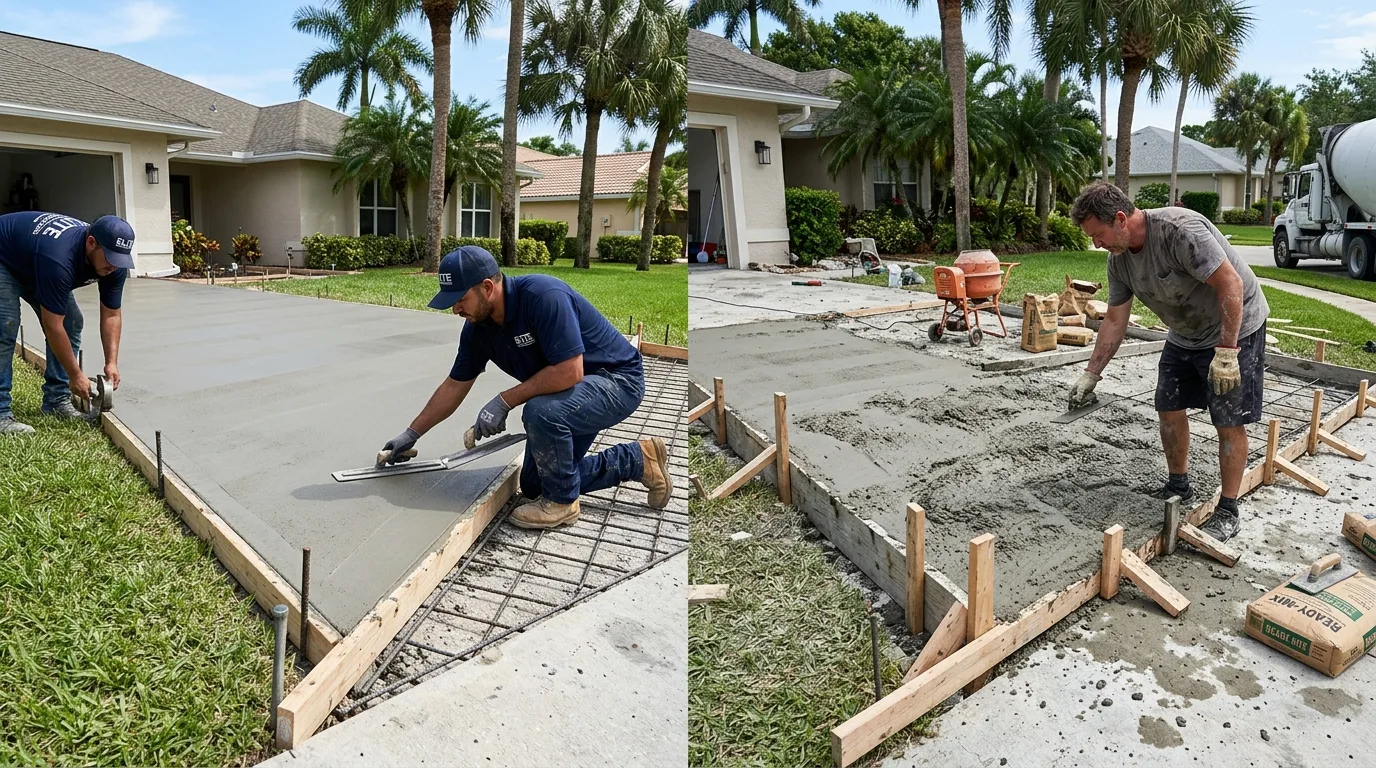
Choosing between stamped concrete and pavers is the most common design decision Oakland Park homeowners face when upgrading a patio, driveway, or pool deck. Both materials look great in photos, but their performance in Broward County’s tropical monsoon climate — and their long-term costs — differ in ways that matter. In this post, we cover installation cost, maintenance requirements, heat performance, and durability so you can make an informed decision for your Oakland Park property.
Stamped Concrete or Pavers for Your Oakland Park Project?
Call Oakland Park Concrete Pros at (888) 376-0955 — we'll walk you through both options and give you an honest recommendation.
Why the Comparison Matters for Oakland Park Homeowners
Oakland Park’s climate creates specific performance demands that don’t apply everywhere. The area receives about 55 inches of rain per year, concentrated in a June-through-October wet season with afternoon thunderstorms. Pool density in Broward County is among the highest in the US, meaning a large share of Oakland Park patio upgrades happen around existing pools. And South Florida’s UV index reaches extreme levels for months at a stretch — any surface material must handle that solar radiation without rapid fading or degradation.
The comparison also matters because the concrete driveway cost range in Oakland Park ($8–$12/sqft for standard concrete installation) overlaps with entry-level paver pricing, making the choice feel financially equivalent — when it’s actually not once maintenance costs are factored in over a ten-year horizon.
Cost: Stamped Concrete vs. Pavers
Stamped concrete in Oakland Park runs $14–$18+ per square foot installed — a 400–600 square foot patio costs $5,600–$10,800.
Concrete pavers in the same Broward County market run $15–$25+ per square foot installed, depending on paver type, pattern complexity, and base prep. Natural stone pavers cost more: $25–$40+ per square foot.
The initial cost difference is modest for mid-range products. The material and maintenance costs over time — including the cost of resetting pavers that settle — often tip the ten-year total cost toward stamped concrete, particularly for surfaces that span large areas or require drainage management.
Types of Each Material
Stamped concrete options:
- Ashlar slate pattern — clean geometric pattern that suits modern Oakland Park homes
- Cobblestone or brick pattern — warmer, old-world look popular in Coral Heights and Lloyd Estates
- Random flagstone pattern — organic appearance that blends with tropical landscaping
- Wood plank pattern — popular for covered outdoor living areas
Paver options:
- Concrete pavers — most affordable, wide color range, consistent sizing
- Travertine pavers — natural stone, stays cooler barefoot, expensive, requires sealing
- Brick pavers — classic appearance, long-term durability, higher cost
- Porcelain pavers — increasingly popular, non-porous, slippery when wet without texture treatment
Practical Comparison for Oakland Park Properties
- Heat retention: Travertine pavers stay significantly cooler barefoot than most concrete surfaces — important for pool decks where bare feet are the norm. Standard stamped concrete with a light-colored finish runs cooler than darker colors. Broward County homeowners with pool decks often choose lighter stamped finishes or travertine specifically for heat management.
- Drainage: Pavers allow water to pass between joints if installed over permeable base — relevant for Oakland Park’s impervious surface calculations. Stamped concrete is impervious and requires designed drainage slopes. Either approach satisfies Broward County permit requirements when properly documented.
- Weed and ant control: Paver joints in South Florida attract weeds and fire ant colonies at a rate that frustrates many homeowners. Polymeric sand reduces but doesn’t eliminate the problem. Stamped concrete has no joints for organic material to accumulate.
- Crack repair: Stamped concrete cracks are more difficult to repair invisibly than pavers, which can be individually replaced. However, pavers in Broward County’s sandy soil settle and shift frequently, requiring periodic re-leveling.
- Resale perception: Both materials read well in real estate photography. In higher-end Oakland Park neighborhoods like Garden Acres and Royal Palm Acres, pavers with natural stone often command slightly higher buyer perception.
How Each Material Holds Up in Broward County’s Climate
Stamped concrete in Oakland Park faces UV sealer breakdown, thermal expansion at control joints, and potential sub-base movement from the high water table. Resealing every two to three years maintains color and protects the surface. Properly installed stamped concrete on an 8-inch limerock base — as required by Oakland Park’s permit — lasts 25+ years structurally.
Pavers in Broward County face weed infiltration, individual paver settlement in sandy soil, and joint sand displacement during heavy rain events. Re-leveling sections and refreshing polymeric sand typically happens every five to seven years. Travertine pavers require sealing to prevent staining from pool chemicals and organic debris.
Get a Side-by-Side Estimate for Both Options
Oakland Park Concrete Pros can price stamped concrete and pavers for your project so you're comparing real numbers — not estimates.
Cost Factors Over a 10-Year Horizon
For a 500 sqft Oakland Park patio, ten-year total cost comparison (installed + maintenance):
Stamped concrete: $7,000–$9,000 installed + $300–$500 for two reseal applications = $7,300–$9,500
Mid-grade concrete pavers: $7,500–$12,500 installed + $800–$1,500 for polymeric sand refresh and spot re-leveling = $8,300–$14,000
Travertine pavers: $12,500–$20,000 installed + $1,000–$2,000 maintenance = $13,500–$22,000
These are market estimates for Broward County conditions — actual costs vary with site conditions, contractor choice, and the frequency of maintenance needed in any given property’s micro-environment.
Frequently Asked Questions
Is stamped concrete or pavers better for pool decks in Oakland Park?
For barefoot comfort and heat, travertine pavers are the gold standard — they stay measurably cooler than concrete in Florida’s direct sun. For cost, durability, and drainage simplicity, stamped concrete with a light color and non-slip aggregate is the practical choice for most Oakland Park homeowners. If budget permits, travertine around the immediate pool edge with stamped concrete for the wider deck area is a popular hybrid approach. See our pool deck resurfacing page for material options.
Do stamped concrete driveways hold up to vehicle traffic in Oakland Park?
Yes — stamped concrete driveways use the same structural concrete mix and limerock base as standard driveways, with the decorative finish applied to the surface. The concrete itself is as strong as any other driveway; the stamps don’t reduce structural performance. Cracks in stamped driveways can be more visible than in plain concrete because the pattern disruption is apparent, but structural performance is equivalent. See our concrete driveways page for Oakland Park specifications.
How often does stamped concrete need to be resealed in South Florida?
Every two to three years in Oakland Park’s climate. Florida’s UV index is significantly higher than the national average, and it degrades acrylic sealers faster than in most markets. Penetrating sealers last longer than film-forming coatings in South Florida’s conditions. Regular resealing is the single most important maintenance step for stamped concrete Oakland Park installations.
Stamped Concrete or Pavers — Oakland Park Concrete Pros Can Help
Free estimates and honest recommendations for Oakland Park patios, driveways, and pool decks. Call (888) 376-0955.
Related: