
How to Maintain Concrete in Florida's Humid Climate
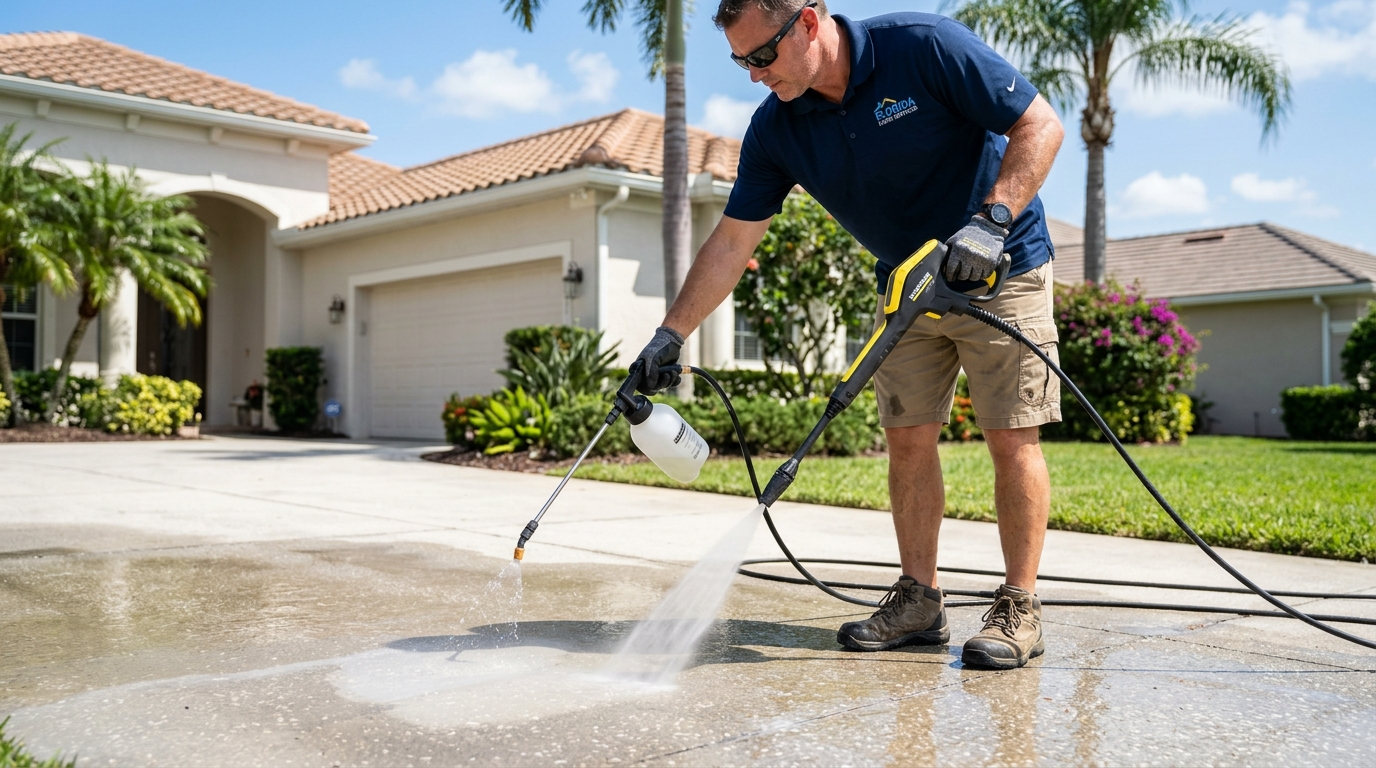
Concrete installed in Oakland Park faces environmental stresses that most maintenance guides written for national audiences don’t address — 55 inches of annual rainfall in concentrated bursts, UV intensity that reaches extreme levels for months at a stretch, and biological growth from Florida’s warm, humid air that turns unsealed concrete surfaces green within a season. The maintenance practices that extend concrete life in Minnesota don’t translate directly to South Florida. In this post, we cover the specific maintenance schedule, products, and practices that keep concrete driveways, patios, and pool decks in good condition in Oakland Park’s climate.
Oakland Park Concrete Maintenance Questions — Ask the Experts
Oakland Park Concrete Pros can assess your existing concrete and recommend the right maintenance approach. Call (888) 376-0955.
Why Concrete Oakland Park Maintenance Is Different
The concrete maintenance challenge in Oakland Park comes from three stressors operating simultaneously that most US markets face only one or two of at a time:
UV intensity: Florida receives more solar UV radiation per year than almost any other state. The UV index reaches 11+ (extreme) on summer days in Oakland Park for months at a stretch. UV degrades acrylic concrete sealers within two to three years — faster than the “three to five years” often cited in general maintenance guides written for northern climates. Unsealed concrete absorbs UV directly, breaking down the cement paste and causing the surface scaling that progresses from cosmetic to structural if ignored.
Biological growth: Oakland Park’s warm, humid air creates ideal conditions for algae, mold, and mildew on concrete surfaces — particularly on north-facing or shaded areas of driveways and patios in tree-canopy neighborhoods like Lloyd Estates and Garden Acres. Green and black biological growth isn’t just cosmetic; it makes concrete surfaces slippery and, when left long enough, penetrates the surface pores and becomes harder to remove without aggressive cleaning.
Wet-dry cycling: June through October brings Broward County’s wet season — afternoon thunderstorms that saturate the surface and the sub-base, followed by dry periods. This cycling stresses concrete at joints and edges, widening cracks that allow water to reach the limerock base. The dry season from November through May, while better for curing and sealing, brings its own maintenance window where deferred maintenance from the wet season should be addressed.
Types of Concrete Maintenance Needed in Oakland Park
Sealing: The single most important maintenance task for all Oakland Park concrete. Apply a penetrating sealer every two to three years for driveways, patios, and pool decks. Penetrating sealers absorb into the concrete and protect from within — more durable in South Florida’s conditions than film-forming acrylic sealers that sit on the surface and peel. For stamped concrete, use an acrylic sealer specifically formulated for decorative concrete — it protects color and pattern while providing UV resistance.
Biological cleaning: Pressure washing with a concrete-safe cleaner removes biological growth before it damages the surface. In Oakland Park, this is typically needed once or twice a year — more frequently on shaded surfaces or those close to tree canopy. Use a concrete cleaner with mildewcide to slow re-growth, and apply after pressure washing and before sealing.
Crack maintenance: Inspect your concrete surfaces after major rainfall events and at the end of each wet season. Cracks that have widened since the previous inspection should be filled immediately — a quarter-inch crack costs $200–$500 to fill; a crack allowed to widen to half an inch creates sub-base damage that can cost $1,000–$3,000 to address properly.
Drainage maintenance: Keep drains, downspout extensions, and the swale clear. Water that pools against concrete edges during Broward County’s heavy rain events erodes sub-base material and accelerates edge cracking. Clear organic debris from low spots after every significant rain event.
How the Maintenance Schedule Works
Year 1 post-installation:
- Allow full 28-day cure before applying sealer
- First sealer application at 60–90 days after pour
- Clean any biological growth that appears by year-end
Years 2–3:
- Inspect for crack development after wet season
- Second sealer application at two to three years
- Address any cracks immediately when found
Years 5–10:
- Continue two-to-three year sealing cycle
- Annual pressure washing in spring before wet season begins
- Assess drainage at any low spots or areas that pool water
Years 10–15:
- Evaluate whether surface condition warrants resurfacing vs. continued maintenance
- A concrete driveway or patio that has been properly sealed and maintained should still be structurally sound at 15 years with surface-level wear only
Help Maintaining Your Oakland Park Concrete
Oakland Park Concrete Pros can assess, clean, seal, and repair your existing concrete — call (888) 376-0955.
Practical Steps for Oakland Park Homeowners
- Choose the right sealer for your application: Penetrating sealers for driveways and plain patios; decorative acrylic sealers for stamped concrete. Ask your concrete contractor what sealer they applied at installation so you can use a compatible product for resealing.
- Seal before the wet season, not after: Sealing in March or April — before Broward County’s wet season begins in June — gives the sealer time to fully cure and provides protection through the highest-stress months. Sealing in October or November is the second-best option.
- Don’t seal over wet or dirty concrete: Allow 24 hours of dry weather before sealing. Sealing over biological growth or dirty concrete traps contamination beneath the sealer and reduces adhesion. Pressure wash and allow to dry thoroughly first.
- Test sealer coverage before applying to the full surface: Apply a small amount to a test area and verify absorption rate and appearance before committing to the full surface. Different concrete porosity levels absorb sealer at different rates.
Cost Factors for Ongoing Concrete Maintenance
Sealing a 500 square foot Oakland Park driveway costs $200–$400 for professional application, or $80–$150 in materials for a DIY approach with a pump sprayer. Professional pressure washing and biological cleaning runs $150–$300 for a typical residential driveway. Crack filling at $200–$800 per event is the most variable maintenance cost depending on crack severity.
The total maintenance cost over a ten-year period for a properly maintained Oakland Park concrete driveway — two sealing applications, two to three pressure washings, one to two crack fill events — runs $800–$2,000. This compares favorably to the cost of premature driveway replacement at $4,000–$6,000 that results from deferred maintenance.
Frequently Asked Questions
How often should concrete be sealed in Oakland Park, FL?
Every two to three years for outdoor concrete surfaces exposed to South Florida’s UV. Stamped concrete may need resealing closer to every two years because the acrylic sealer used to protect color degrades faster in Florida’s UV than penetrating sealers used on plain concrete. See our how long concrete lasts in Florida guide for the full maintenance timeline.
How do I remove algae and mold from concrete in Oakland Park?
Pressure wash with a concrete cleaner containing sodium hypochlorite (bleach-based) or oxygenated cleaner, followed by rinsing. For stubborn biological growth in shaded areas of Lloyd Estates or Garden Acres properties with heavy canopy, apply the cleaner before pressure washing and allow a 10–15 minute dwell time. Seal after cleaning and drying. Annual or semi-annual pressure washing prevents biological growth from becoming difficult to remove. Our concrete repair service includes cleaning and assessment for Oakland Park properties.
Can I seal my Oakland Park concrete myself or do I need a professional?
DIY sealing is feasible for plain concrete driveways and patios. Purchase a penetrating sealer appropriate for outdoor concrete, rent or buy a pump sprayer, and follow the manufacturer’s application instructions. Allow 24 hours of dry weather before and after application. Stamped concrete sealing is best done professionally — the acrylic sealer used for stamped surfaces requires even application to avoid lap marks, and the decorative surface amplifies any inconsistency in coverage. See our stamped concrete page for professional sealing services.
Keep Your Oakland Park Concrete in Top Condition
Oakland Park Concrete Pros provides sealing, cleaning, and repair services — call (888) 376-0955 to schedule.
Related: